FREE HIRING TOOL · VIDEO PRODUCTION
AI video creator evaluation scorecard. Hire beyond the reel.
Compare creators or studios against the same production brief. Score complete work, direction, continuity, finishing, delivery, process, rights, and commercial fit—then copy or download the evidence record.
ANSWER FIRST
The best portfolio test is a complete video against a real brief.
Do not hire from a montage, follower count, model list, or one impressive frame. Watch full cuts, inspect the production trail, verify the delivery and rights terms, and test the hardest unknown with a paid pilot when necessary.
FREE EVALUATION TOOL
Score the evidence—not the confidence.
Rate only what you can inspect or verify. A missing artifact stays unscored; a persuasive explanation is not the same as visible production evidence.
WEIGHTED RESULT
—/100
0/8 dimensions reviewed
Complete all eight dimensions before using the total. Unreviewed evidence should remain visible.
LOCAL + PRIVATE
Names, notes, and scores stay in this browser session. They are not submitted, stored, or added to analytics. Copy and download happen locally.
THE EIGHT DIMENSIONS
What should you look for in an AI video creator?
Apply every dimension to the same brief. Score a claim only when you can point to complete work, an intermediate artifact, a written process, or a contract term that supports it.
01
15% weight
Complete work and brief relevance
Can you inspect complete videos that resemble the format, category, and communication job in your brief?
Strong evidence: Complete cuts with a clear beginning, middle, and end; useful context about the brief; and examples close enough to your intended channel to reveal relevant judgment.
Watch for: A highlight reel of disconnected shots can hide weak structure, continuity, audio, and delivery discipline.
02
15% weight
Creative direction and storytelling
Can the creator explain the idea, audience, hook, references, shot plan, and choices behind the final cut?
Strong evidence: A deliberate concept, a readable message, references used as direction rather than imitation, and a sequence where each shot has a job.
Watch for: Tool fluency without a point of view often produces attractive fragments instead of a usable advertisement or story.
03
15% weight
Continuity and product fidelity
Do people, products, wardrobe, environments, lighting, and camera language remain coherent across the cut?
Strong evidence: Stable identity and product details, purposeful changes between shots, and a clear method for rejecting or repairing drift, artifacts, and incorrect text.
Watch for: Fast cuts can conceal morphing subjects, changing packaging, unstable typography, and inconsistent environments.
04
15% weight
Editing, sound, and finishing
Does the work demonstrate editing judgment beyond generation?
Strong evidence: Pacing, shot selection, transitions, cleanup, grading, graphics, captions, voice, music, and sound design feel intentional and channel-ready.
Watch for: Raw generations placed on a timeline are not the same as a finished commercial video.
05
10% weight
Formats and delivery readiness
Can the creator define and deliver the actual matrix of masters, ratios, cutdowns, captions, and safe areas?
Strong evidence: The scope names runtimes, aspect ratios, resolutions, captions, languages, file formats, clean masters, cutdowns, and platform-specific review.
Watch for: One attractive export does not prove the work will survive vertical crops, short cutdowns, or paid-social interface constraints.
06
10% weight
Process, review, and revisions
Is there a visible path from brief to approved direction, production, review, and final delivery?
Strong evidence: Named milestones, consolidated feedback, a final approver, revision assumptions, acceptance criteria, and a plan for failed or unstable shots.
Watch for: Unlimited revisions or an undefined review loop usually means the quality bar and decision ownership have not been agreed.
07
10% weight
Rights, disclosure, and provenance
Can the creator identify the source, license, permission, and disclosure boundary for every material input and delivered asset?
Strong evidence: Written treatment of supplied assets, model terms, music, voice, likeness, trademarks, markets, media, usage term, disclosure, and editable-file ownership.
Watch for: A confident verbal assurance is not a substitute for named sources, permissions, usage terms, and client-side legal review.
08
10% weight
Communication and commercial fit
Does the creator ask useful questions, surface uncertainty, and scope the actual production problem?
Strong evidence: Direct communication, realistic tradeoffs, explicit dependencies, a working budget range, timing, ownership, and a willingness to say when AI is not the right method.
Watch for: Immediate agreement to every requirement can indicate that difficulty, rights, review time, or delivery complexity has not been examined.
PRACTICE ON COMPLETE WORK
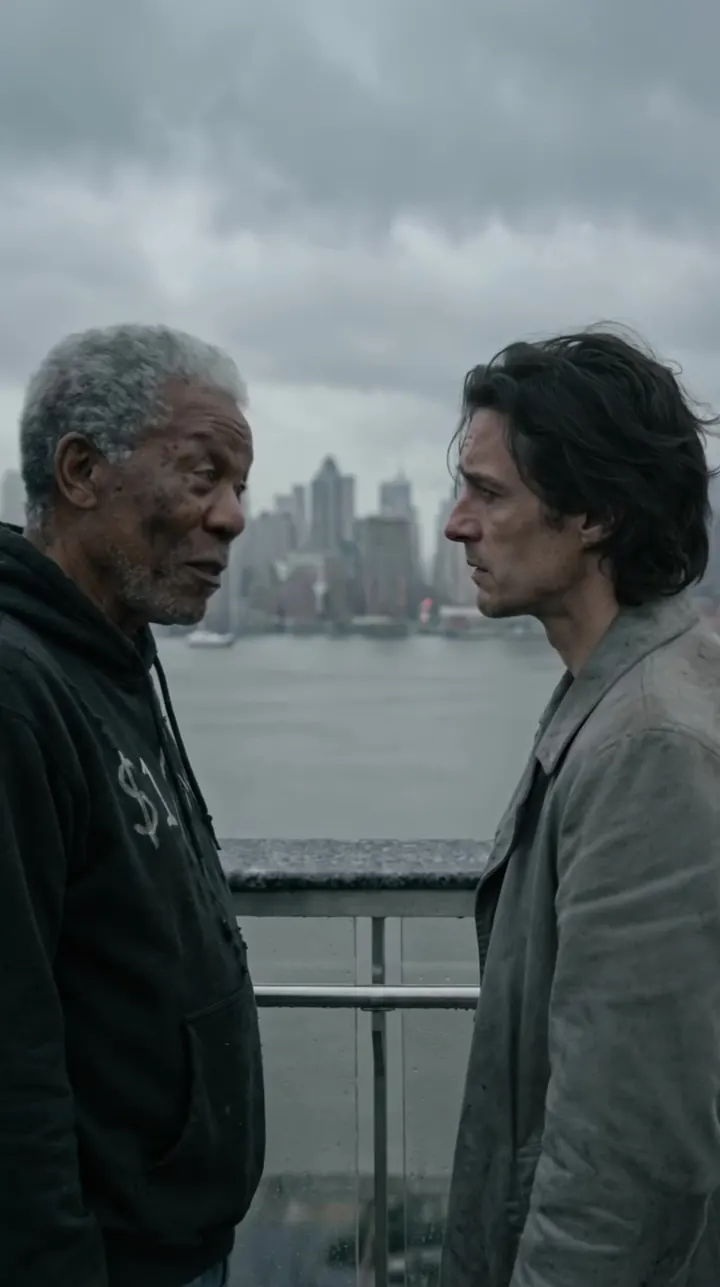
Three cuts. Three different production problems.
Open each dedicated watch page and apply the same scorecard. The examples demonstrate finished craft and production range; they are not presented as campaign-performance, client-approval, or rights-clearance evidence.

WHEN THE PORTFOLIO IS NOT ENOUGH
Run a paid pilot that tests the uncertainty.
A pilot is useful when it reduces a specific risk. It should be small enough to learn quickly and realistic enough to predict the working relationship. Agree the fee, rights, review, and delivery before work begins.
01
Test the hardest requirement
Choose one representative continuity, product, narrative, format, or finishing problem. A generic mood clip will not reduce the uncertainty in the real brief.
02
Use realistic inputs
Supply the actual kind of product files, brand rules, copy, references, aspect ratio, and approval constraint the larger production will require.
03
Define acceptance before work
Agree what must remain exact, what may be interpreted, which failure modes cause rejection, and who makes the final decision.
04
Review the production trail
Inspect references, shot plan, selected and rejected outputs, edit decisions, feedback handling, final export, and the rights or delivery record.
PREPARE THE INPUT
A scorecard cannot repair a vague brief.
Use the production brief builder to define the objective, delivery matrix, references, inputs, rights, acceptance criteria, review process, timing, and budget before comparing providers.
AI VIDEO CREATOR EVALUATION FAQ
Questions before you hire.
How should I evaluate an AI video creator?
Start with a real brief, then inspect complete work—not only a reel. Evaluate whether the creator can explain the idea, maintain continuity and product fidelity, finish the edit and sound, deliver the required formats, run a clear review process, document rights, and communicate production risk. Record what is visible and leave missing evidence unscored.
What is a good AI video creator score?
The number is less important than the evidence behind it. A high score should mean all eight dimensions were reviewed against the same brief and supported by inspectable work or written terms. A low or incomplete dimension identifies a question or pilot requirement; it does not automatically prove that a creator is unsuitable for every project.
Should I ask which AI video models a creator uses?
Yes, when model choice affects rights, security, quality, continuity, or procurement. But a tool list is weak hiring evidence by itself. Ask why a model fits the brief, what its failure modes are, which conventional editing steps remain necessary, and how the workflow changes when an output cannot pass review.
Should I run a paid AI video pilot before a larger project?
Use a paid pilot when the portfolio does not prove the hardest requirement in your brief. Test one representative problem with supplied inputs, acceptance criteria, a fixed review owner, written rights, defined delivery files, timing, and a fee. Do not disguise speculative work or an open-ended pitch as a free test.
What rights questions should I ask an AI video freelancer?
Ask about supplied assets, model terms, training or retention settings where relevant, music, voice, likeness, trademarks, stock, markets, media, usage term, disclosure, source files, and who is responsible for final legal review. Rights depend on the actual inputs, tools, contract, and intended use; they cannot be guaranteed by a generic scorecard.
Does this scorecard submit or store candidate information?
No. Candidate names, project notes, scores, and evidence notes stay in the current browser session. They are not submitted, stored, or added to analytics. Copying and Markdown download happen locally, and you decide where the evaluation goes next.
FROM EVALUATION TO A REAL SCOPE
Need one accountable owner for the final cut?
Review the direct-hire page for image and video capability, complete work, collaboration context, the production process, availability, and what to include in the first message.